How Nintendo crammed a smasher’s playground into a single layer
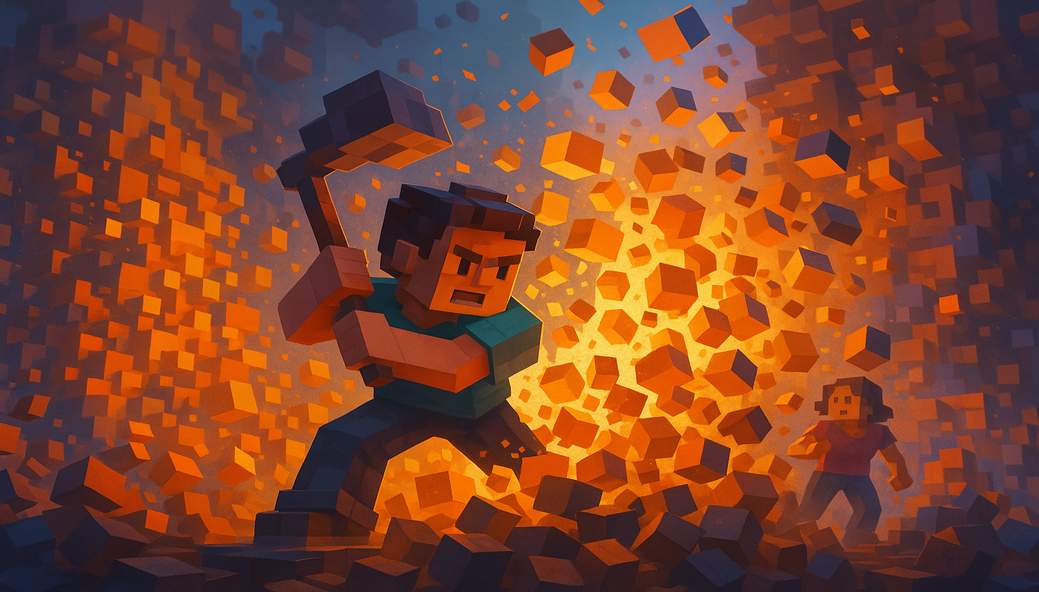
At a GDC talk, Donkey Kong Bananza’s Kenta Motokura and Tatsuya Kurihara peeled back the curtain on how the game’s world was built — and spoiler: it involves a ridiculous number of tiny building blocks. Nintendo leaned hard on voxels (think 3D pixels) to make environments that you can bash to bits, an idea they first toyed with in Super Mario Odyssey for things like snow and gooey bits.
One of the levels, the Canyon layer, isn’t just big — it’s packed with about 347,070,464 individual voxels. Each voxel isn’t just a shape; it can carry properties like how dense or soggy it is, whether it breaks, even how it behaves in motion. Voxels can form terrain, props, and even moving little critters, so destruction isn’t just cosmetic — it changes what’s in the world.
The team’s goal was simple and chaotic: make smashing stuff feel weighty and rewarding. That meant balancing visual detail, simulation, and frame-rate — a tricky juggling act that only really became possible once development shifted to Switch 2 hardware.
Why this matters to players (and why the team ate bananas over it)
Gameplay-wise, destructible voxels change how you approach a stage. Paths, enemies, and secrets can all rearrange themselves as you pound, dig, or fling things around. That turns each run into a sandbox puzzle where muscley DK abilities actually feel meaningful, not just flashy animations.
Technically, getting all those voxels to behave while keeping smooth 60fps was a big hurdle. The project started on the original Switch, where the hardware couldn’t quite keep up; the extra headroom on Switch 2 let Nintendo push the idea further without turning the framerate into a slideshow.
Donkey Kong Bananza launched as a Switch 2 exclusive on July 17, 2025, and later got the DK Island and Emerald Rush DLC in September for $19.99, adding new areas and toys to dig through. Critics loved the package — IGN handed the base game a 10/10 — and players have been buzzing about the satisfying chaos of watching a gorgeous level implode under your fists.
At the GDC session the developers admitted there were rough patches and plenty of confusion during development, but also plenty of laughs (and banana jokes) that kept the team moving forward. The upshot: a destructible playground that’s as technically impressive as it is fun to wreck.