Why Paradise still feels like a cheat code for fun
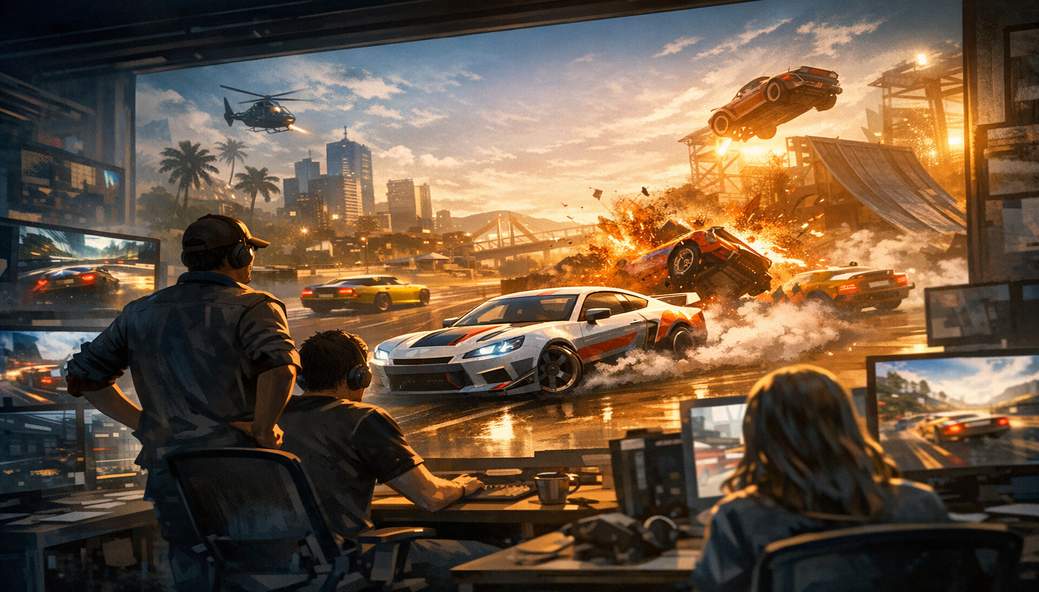
Burnout Paradise landed in 2008 and immediately felt like someone sneaked an arcade dream into the real world. Instead of being stuck on a track, you could just drive, ram, and bumble around a city that seemed designed for chaos. That open-world twist wasn’t the norm back then — it made the game feel fresh, reckless, and strangely social.
The multiplayer wasn’t about formal races so much as mutual idiocy: hop in a lobby and start goofing off with friends or strangers. That loose, playful vibe turned driving into an excuse to hang out, not just compete. Developers say that social sandbox spirit is a big part of why the game still clicks with players.
Fast forward and you can see that spark reflected in newer series like Forza Horizon, which expanded the idea of social driving into a full-on festival. But Burnout Paradise was doing that years earlier, which helps explain why fans keep coming back.
What the original creators are doing now (and why it matters)
Matt Webster and Kieran Crimmins — who worked on the last big Burnout entry while at Criterion/EA — admit that making something with that same cultural punch is brutally hard. The conditions, timing, and creative risks that made Paradise sing don’t line up very often, so cloning its impact is a tall order.
Still, they’re trying new things. At Fuse Games they’re crafting Star Wars: Galactic Racer, which shifts toward faster, consequence-driven racing and even borrows roguelike ideas for its campaign. It’s due October 6 on PC, PS5, and Xbox Series, so if you liked the thrill of unpredictable runs, this one’s worth keeping an eye on.
Why should players care? Because the people who helped define modern arcade racing are actively experimenting again. Whether they recapture Paradise-level lightning or just push the genre in fresh directions, it’s exciting for anyone who loves big, dumb, joyful driving games.