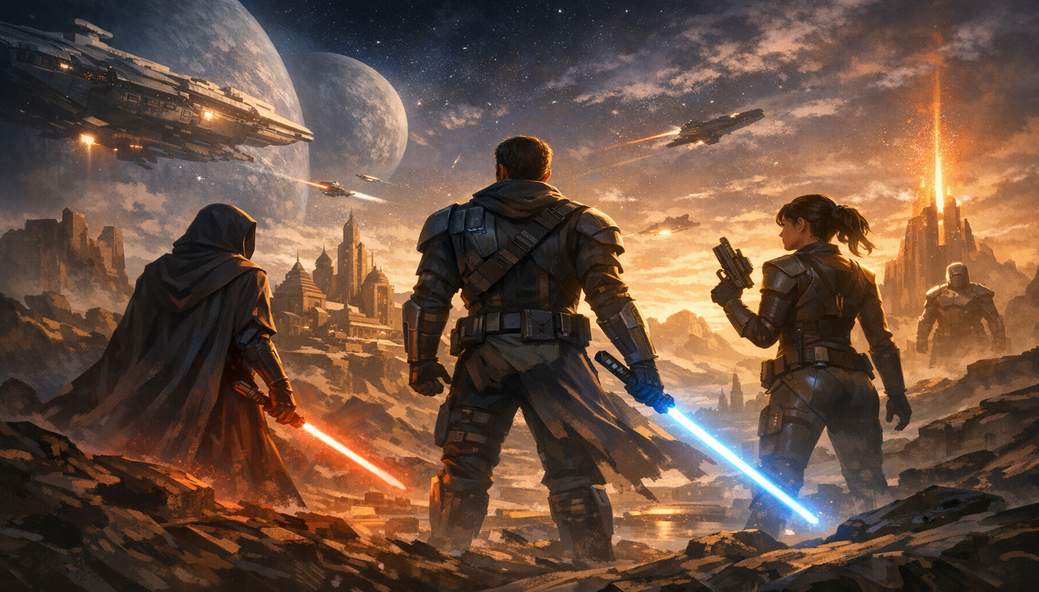
The pitch: turning SWTOR into an “online KOTOR”
In 2015 James Ohlen — a veteran BioWare designer who worked on classics like KOTOR and Baldur’s Gate — spent about half a year sketching a dramatic reboot for Star Wars: The Old Republic. He called the concept The New Republic, and the whole point was to reshape the MMO into something that felt a lot more like a KOTOR-style RPG mashed with online play: tighter storytelling, sharper choices, and fewer MMO trappings that he thought weren’t working.
Ohlen managed to sell the idea to big names, too. He says Kathleen Kennedy and Dave Filoni liked it, and Filoni apparently got so into the concept that he asked for the story to be set roughly 200 years before the Republic’s fall so he could tie in other projects. Patrick Soderlund — then head of EA Worldwide Studios — was convinced as well, which Ohlen counts as a major personal victory.
Why it died, and why players should care
The dream didn’t make it past EA’s board. Executives remembered the massive initial SWTOR development bill — roughly $300 million — and balked at sinking more cash into a risky overhaul. In short: the math didn’t add up for them, so the reboot was canned and Ohlen eventually left BioWare in 2018 after 22 years at the studio.
So what does this mean for players? If The New Republic had shipped, SWTOR might have leaned harder into single-player style storytelling and rich RPG systems, potentially changing how MMO narratives are built. Instead, SWTOR keeps following its existing model: it’s still live, free-to-play with the first two expansions included for everyone, while subscribers pay for deeper access and benefits.
For the community it’s a bittersweet truth: a tantalizing “what if” that could have fixed some aspects longtime fans grumbled about, but also a reminder of how financial risk shapes game decisions. Ohlen’s account is his perspective on a project that never reached production, but it offers a rare peek at how big ideas can die on the boardroom floor — even when creatives and talent are excited.
Bottom line: fans still have SWTOR to play, but the chance to see an official “online KOTOR” from the original team evaporated — and that sting is why this story still matters to RPG nerds and Star Wars junkies alike.