A tiny Famicom game with a huge spooky reputation
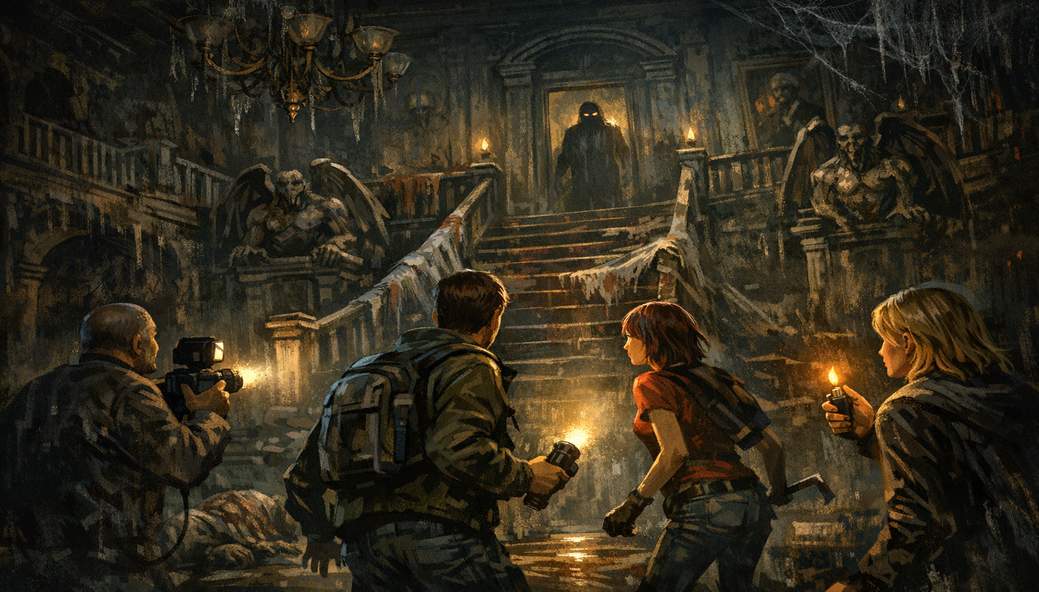
Long before zombies were a PlayStation staple, Capcom shipped a jam-packed horror RPG for the Famicom in 1989 called Sweet Home. It stayed in Japan only, was based on a movie, and stars five unlucky folks who go into a mansion hunting frescoes and find, surprise, ghosts and weird supernatural nonsense instead.
Don’t let the 8-bit look fool you — Sweet Home already had many of the DNA pieces we now call “survival horror”: a maze-like map that locks you out of areas until you find keys and items, tight inventory juggling, brain-twisting puzzles, and an atmosphere that prefers tension over constant action. Combat? It leaned turn-based with random encounters, and it even used early quick-time event ideas. Characters could die for good, changing the ending depending on who survived, and each character carried a unique item you needed — so party composition actually mattered.
Oh, and the director was Tokuro Fujiwara, a Capcom vet behind classics like Ghosts ’n Goblins. Critics and players liked the game so much that many reckon it outshines the movie it was adapted from.
Where Resident Evil comes in (spoiler: it’s basically a spiritual remake)
Fast-forward a few years and Resident Evil shows up. The seed for it? Sweet Home. Fujiwara later helped shape the idea of remaking his own Famicom horror as a modern survival game, and that concept evolved into what became Resident Evil. Shinji Mikami then mixed in influences from Alone in the Dark for fixed camera angles and pre-rendered backdrops, and a healthy dose of Romero-style zombies for the tone.
Resident Evil’s trademark features — the claustrophobic mansion, inventory tension, item-based progression and puzzle locks — trace a line back to Sweet Home. The series’ design also went through wild detours in development: it started as a SNES idea, flirted with first-person concepts (which only got revisited decades later in Resident Evil 7), and eventually settled on the third-person, cinematic approach we associate with the early titles.
How to experience Sweet Home today (and why you might want to)
Here’s the awkward part: Sweet Home never officially left Japan and hasn’t been reissued on modern consoles, so there’s no official Western release or digital storefront purchase. The only truly legal way to own it is to track down an original Famicom cartridge and hardware — a proper collector’s quest.
That said, the community has kept it alive: fans created an unofficial English translation patch so non-Japanese players can follow the story, and retro-enthusiasts often praise it as a missing link in horror game history. If you care about where survival horror’s mechanics came from, Sweet Home is basically an archaeological dig site for game designers.
Bottom line: if you love Resident Evil’s mood, puzzles, and item-management headaches, Sweet Home is the ancestor worth knowing — small, strange, and ridiculously influential for a game you probably never saw in stores.